
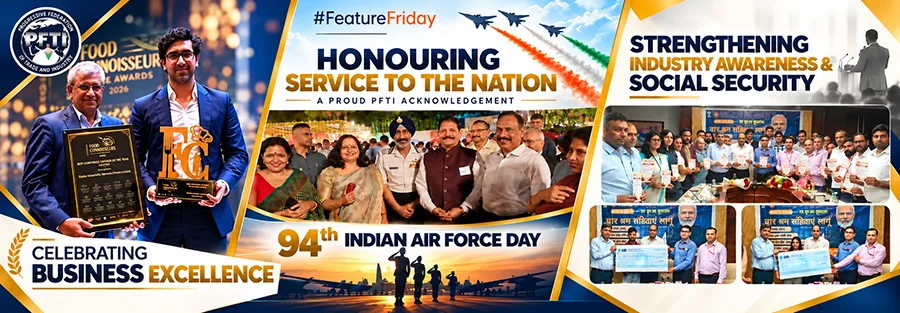
These priorities come together through industry welfare initiatives that connect commercial progress with responsibility, knowledge, and long-term resilience.
Well-designed industry welfare initiatives can bring these themes onto one platform without reducing any of them to a ceremonial message.
Why Industry Welfare Initiatives Matter Beyond Business Growth
Industry welfare initiatives can encourage companies to think beyond quarterly performance and consider leadership quality, responsible employment, workforce security, knowledge sharing, and contribution to national development.
Industry Welfare Initiatives Can Celebrate Business Excellence Responsibly
Industry welfare initiatives can highlight businesses that demonstrate innovation, ethical leadership, quality improvement, employment generation, productivity, sustainability, or meaningful contribution to their sector.
Businesses can explore this wider institutional vision on the PFTI About Us page.
Industry Welfare Initiatives Should Honour Service to the Nation
Industry welfare initiatives can create space to recognise people whose careers, public responsibilities, defence service, civic work, institutional leadership, or professional contribution have strengthened society.
Industry Welfare Initiatives Strengthen Industry Awareness
Industry welfare initiatives should therefore include practical awareness programmes, expert discussions, policy updates, technical sessions, and simplified explanations of important developments.
The PFTI Knowledge Hub is designed around industry-specific updates, reports, expert knowledge, trends, and peer learning.
Industry Welfare Initiatives Can Improve Social Security Awareness
Industry welfare initiatives can improve understanding of mechanisms such as provident fund coverage, insurance-linked protections, pensions, workplace benefits, and other employee-related social security provisions.
A better-informed workplace can improve trust because people understand not only their responsibilities but also the systems intended to support long-term security.
Industry Welfare Initiatives Should Connect Social Security With Business Stability
Social security is not separate from business continuity.
Industry welfare initiatives can help employers see workforce security as part of organisational resilience. Employees who understand formal benefits, retirement contributions, insurance protection, and statutory entitlements are better able to plan their financial lives.
Businesses also benefit from clearer systems because payroll, documentation, onboarding, compliance, and employee communication become more disciplined.
Reuters reported in September 2026 that India’s cabinet approved an increase in the wage ceiling for Employees’ Provident Fund coverage from ₹15,000 to ₹25,000, a move intended to extend provident-fund coverage to more salaried employees. Read the Reuters report.
Industry Welfare Initiatives Need Reliable Information, Not Rumours
Employment and social-security rules can change, and incomplete information can spread quickly through informal networks.
Industry welfare initiatives should encourage businesses to verify important developments before changing payroll, HR, contracts, or compliance processes.
Wikipedia’s overview of social security in India provides general background on major systems such as EPF and ESI, but businesses should always rely on current government notifications and professional advice for operational decisions.
This distinction is important. Awareness content can explain concepts, but final compliance action should be based on authoritative and current sources.
Industry Welfare Initiatives Create a Culture of Learning
The strongest industry communities do not treat knowledge as a one-time event.
Industry welfare initiatives can create recurring opportunities for peer learning, expert interaction, workshops, policy briefings, leadership conversations, and sector-specific discussions.
When businesses learn from one another, they can identify problems earlier and avoid repeating mistakes that others have already solved.
Learning also becomes more practical because members can compare implementation experiences rather than discussing ideas only at a theoretical level.
A culture of learning makes an industry body useful between major events, not only during annual programmes or formal ceremonies.
Industry Welfare Initiatives Can Support Responsible Leadership
Business excellence and employee welfare are often connected through leadership quality.
Industry welfare initiatives can promote leadership that pays attention to safety, fair processes, communication, professional development, compliance, and long-term employee confidence.
Responsible leadership does not require every company to operate identically. It requires leaders to understand that decisions about people have consequences beyond immediate cost.
The strongest businesses create clear standards and make those standards visible through everyday behaviour.
Recognition programmes can reinforce this by celebrating leaders whose achievements include both business results and responsible organisational practices.
Industry Welfare Initiatives Benefit MSMEs Especially
Large companies often have dedicated HR, legal, compliance, policy, and communications teams. Smaller businesses may not.
Industry welfare initiatives can help MSMEs access information and professional perspectives they might otherwise struggle to obtain independently.
An MSME may need help understanding a policy change, an employment-related requirement, a government scheme, or a new market opportunity. Shared sessions and practical resources reduce the burden of finding and interpreting everything alone.
This is one reason industry associations can create value beyond networking: they can make knowledge and expertise more accessible to businesses with limited internal capacity.
PFTI Services Can Strengthen Industry Welfare Initiatives
PFTI’s service framework already connects several areas relevant to this wider agenda.
The PFTI Services page highlights policy advocacy and representation, research and industry insights, mentoring and advisory support, publications, legal support, networking, and other business-focused services.
Industry welfare initiatives become more useful when awareness, representation, mentoring, and knowledge operate together rather than as disconnected activities.
A business that attends an awareness session may later need expert guidance. A policy concern may require research. A leadership discussion may lead to mentoring. The ecosystem becomes stronger when these pathways are connected.
Industry Welfare Initiatives Should Encourage Participation, Not Passive Attendance
The quality of an industry programme depends partly on the people participating in it.
Industry welfare initiatives are more effective when members share questions, examples, challenges, and ideas instead of attending only as an audience.
This participation helps associations understand what businesses actually need. It also makes sessions more practical because discussions are connected with real situations.
The PFTI Membership page presents policy advocacy, industry insights, skill development, networking, global opportunities, and business support among the reasons companies may choose to participate in the federation.
Membership creates more value when it becomes active engagement.
Industry Welfare Initiatives Can Build Stronger Employer-Employee Awareness
Many workplace disagreements begin with unclear expectations or incomplete information.
Industry welfare initiatives can encourage employers to communicate policies, benefits, deductions, statutory contributions, grievance channels, and workplace responsibilities in language employees can understand.
This does not replace formal HR documentation. It strengthens it.
When employees know where to find information and whom to approach with questions, confusion can be addressed earlier.
For employers, better communication can reduce repetitive disputes and strengthen confidence that systems are being implemented transparently.
Awareness is therefore not only an educational activity; it is also a practical management tool.
Industry Welfare Initiatives Should Link Excellence With Integrity
Business excellence is incomplete if achievement is separated from integrity.
Industry welfare initiatives should celebrate performance while reinforcing responsible conduct, accurate reporting, fair dealing, and respect for people.
Awards and recognition carry more credibility when selection standards are clear and when achievement is connected with demonstrable work rather than promotional claims.
This approach also protects the reputation of the institution giving the recognition.
When excellence is linked with integrity, recognition becomes a signal of standards that the wider business community can respect and learn from.
industry welfare programmes Can Strengthen National Commitment
Industry contributes to the nation through investment, employment, taxes, exports, innovation, skills, and community participation.
industry welfare programmes can help businesses understand this wider role without turning national contribution into a slogan.
PFTI’s stated mission connects industry development with initiatives such as Make in India, Skill India, Digital India, and Vocal for Local. Its value of “Samarpan” similarly frames commitment as extending beyond individual business interest.
The practical message is that stronger enterprises and stronger national capability can reinforce one another when growth is responsible, competitive, and connected with people.
industry welfare programmes Should Produce Follow-Through
Events and recognition programmes create attention, but lasting value depends on what happens afterward.
industry welfare programmes should lead to continued learning, better awareness, practical resources, expert connections, or follow-up discussions where appropriate.
A social-security session can produce an employer checklist. A business-excellence programme can produce case studies. A policy-awareness event can lead to member guidance. A recognition platform can connect experienced leaders with emerging entrepreneurs.
Follow-through converts a moment into a resource.
This is how an association can make its programmes useful long after the stage, certificate, or event has ended.
Conclusion: industry welfare programmes Connect Excellence With Responsibility
A strong industrial ecosystem needs successful businesses, but it also needs informed employers, secure workers, responsible leaders, and people whose service inspires others.
industry welfare programmes can bring these priorities together by celebrating genuine business excellence, honouring contribution to the nation, strengthening awareness, and improving understanding of social security.
For PFTI, this approach fits a broader role: connecting knowledge, representation, collaboration, recognition, and responsibility within one business community.
The objective should not be to create more activity for its own sake. It should be to create programmes that businesses can learn from, people can trust, and the wider industry can use.
When excellence is celebrated responsibly, service is respected, awareness is strengthened, and social security is better understood, industry progress becomes more complete. It reflects not only how businesses grow, but also how thoughtfully they contribute to the people and institutions around them.