
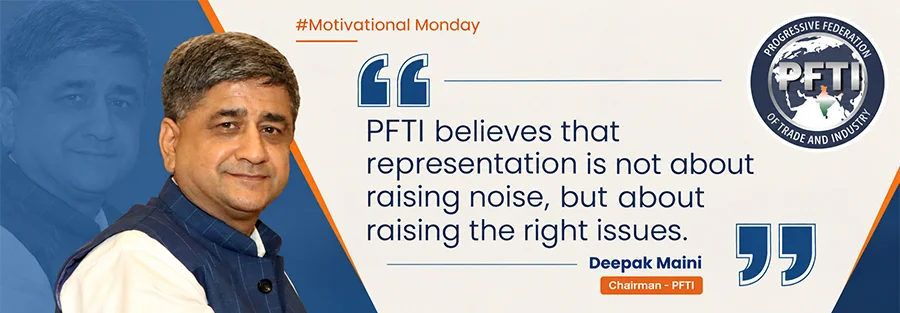
That is the purpose of effective industry representation.
When businesses face tax uncertainty, infrastructure bottlenecks, regulatory friction, market-access barriers, financing problems, or implementation gaps, effective industry representation should convert those experiences into clearly defined issues and practical recommendations.
Why Effective Industry Representation Is Different From Noise
Effective industry representation begins by asking whether a concern is genuinely important to a wider business community.
Effective Industry Representation Begins With Listening
Effective industry representation requires listening to companies of different sizes, sectors, and locations before forming a position.
Effective Industry Representation Turns Complaints Into Defined Issues
Effective industry representation asks specific questions: What exactly is happening? Which rule, process, system, or institution is involved? How many businesses are affected? What is the operational impact? What outcome would improve the situation?
PFTI’s article on Industry Policy Dialogue explains how business concerns can move from frustration toward structured dialogue and practical recommendations.
A problem caused by policy design may need a different response from one caused by inconsistent implementation. Clear issue definition helps everyone discuss the same problem.
Effective Industry Representation Depends on Evidence
Evidence changes the quality of representation.
Effective industry representation can be supported by member feedback, timelines, transaction records, processing delays, technical analysis, survey findings, cost implications, or comparable experiences across companies.
Evidence does not guarantee that a recommendation will be accepted. It does make the concern easier to evaluate. Decision-makers can see the scale of the problem, understand who is affected, and assess whether a proposed adjustment is practical.
A federation becomes more useful when its claims can be examined rather than merely repeated.
Effective Industry Representation Takes the Right Issue to the Right Table
A valid concern can still fail if it reaches the wrong institution.
Effective industry representation requires understanding where authority sits. A power-quality issue may involve a utility or regulator. A tax interpretation may require a revenue authority. A financing issue may involve banks, regulators, or a government scheme.
The PFTI Services page identifies Policy Advocacy & Representation and Research & Industry Insights among its core areas.
The objective is not to bypass formal systems. It is to engage the stakeholder who actually has the mandate, expertise, or practical ability to address the issue.
Effective Industry Representation Needs Subject Expertise
Complex issues cannot be handled well through general statements.
Effective industry representation should involve people who understand the technical details of the subject being discussed. Power, GST, labour, exports, environmental compliance, finance, manufacturing, and technology each have different legal and operational realities.
Committees and specialists can test whether a concern is being described accurately. They can also identify consequences that may not be obvious from one company’s experience.
Expertise improves both diagnosis and recommendation. It helps an association raise fewer issues, but raise them better.
Effective Industry Representation Should Recognise Different Industry Views
Industry is not always unanimous.
Effective industry representation should identify common ground without pretending that every business has the same interest. A policy change may help exporters and challenge domestic producers. A compliance requirement may be manageable for a large company but difficult for an MSME.
A credible federation should explain these differences honestly. Artificial consensus may create a stronger headline, but accurate representation creates stronger trust.
The objective is to present shared concerns clearly while acknowledging legitimate differences where they exist.
Effective Industry Representation Creates a Stronger Collective Voice
Individual businesses usually communicate from their own immediate experience.
Effective industry representation brings those experiences together and identifies the common issue beneath them.
PFTI’s article Giving Industry a Stronger, Unified Voice highlights the importance of organised business platforms in connecting individual concerns with wider policy discussions.
A unified voice does not mean repeating one slogan. It means identifying the part of a problem that businesses genuinely share, supporting it with evidence, and presenting it consistently enough for stakeholders to understand its wider significance.
Effective Industry Representation Should Offer Practical Solutions
Strong advocacy does not end with criticism.
Effective industry representation should ask what can realistically improve the situation. The answer may be a clarification, simpler procedure, phased implementation period, improved digital workflow, stronger infrastructure, revised threshold, or better coordination between departments.
Sometimes the solution may also require businesses to improve documentation or compliance.
Constructive recommendations signal that industry is trying to improve outcomes, not simply resist change. That approach creates more room for meaningful engagement.
Effective Industry Representation Works Through Consultation
Consultation matters because policies can create practical effects that are difficult to predict before implementation.
Effective industry representation gives affected businesses a route to explain those effects.
Reuters reported in October 2026 that India’s insurance brokers opposed proposed regulatory reforms, arguing that commission caps could significantly affect their business model and employment. The industry body sought reconsideration through the consultation process. Read the Reuters report.
The lesson is not that every industry request should be accepted. It is that organised representation allows sector-specific consequences to enter a formal discussion.
Effective Industry Representation Can Improve Regulatory Clarity
Sometimes businesses do not seek reversal of a policy. They seek clarity.
Effective industry representation can identify where rules are interpreted differently, implementation guidance is incomplete, or new requirements create uncertainty.
Reuters reported on October 12, 2026 that Indian banks, through an industry body, approached the Reserve Bank of India seeking modifications and clarification on newly introduced foreign-exchange measures. Read the Reuters report.
This illustrates an important role for organised representation: sometimes the useful request is not “remove the rule,” but “clarify the rule, refine the mechanism, or reduce unintended friction.”
Effective Industry Representation Must Avoid Exaggeration
Credibility is difficult to build and easy to lose.
Effective industry representation should avoid exaggerated numbers, unsupported claims, and dramatic language that cannot be defended. If a problem affects only a small group, say so. If evidence is preliminary, describe it as preliminary. If members disagree, acknowledge the disagreement.
This does not weaken representation. It strengthens it because stakeholders know the association is willing to distinguish fact from assumption.
Over time, accuracy can become more valuable than short-term visibility.
Effective Industry Representation Requires Responsible Members
Associations can only work with the information members provide.
Effective industry representation becomes stronger when businesses submit accurate examples, documents, dates, and operational details. Members also need to distinguish an industry issue from a private commercial dispute.
The PFTI Membership page highlights policy advocacy, government liaison, networking, market intelligence, and participation opportunities.
That participation matters. A federation cannot identify patterns if businesses remain silent until a problem becomes severe. Early, specific input improves both the quality and timing of representation.
Effective Industry Representation Needs Follow-Through
Raising an issue creates expectations.
Effective industry representation therefore needs a process after the initial discussion. The issue may require research, committee review, stakeholder meetings, written representation, technical clarification, or further member evidence.
Not every matter will produce a policy change. Some requests may be rejected. Others may require long-term engagement.
Follow-through still matters because members need to understand what happened, what response was received, and whether further action is possible.
Balanced Industry Advocacy Is More Valuable Than Permanent Opposition
An industry body should not define itself by opposing every new rule.
Balanced industry advocacy requires judgement about when to support, when to seek clarification, when to recommend modification, and when to challenge a proposal.
Some reforms may create short-term adjustment costs but produce long-term benefits. Others may have unintended consequences requiring correction.
A mature association should be able to recognise both. This balanced approach protects its ability to engage constructively instead of becoming predictable before the facts are understood.
Why PFTI’s Approach to Balanced Industry Advocacy Matters
PFTI’s value is strongest when it acts as a bridge between real business experience and structured dialogue.
Balanced industry advocacy through PFTI can connect member concerns, research, committees, professional expertise, and stakeholder engagement.
The purpose is not to promise that every request will result in reform. The purpose is to ensure that genuine concerns are defined properly, supported responsibly, and taken to people who can evaluate them.
That is a more durable form of influence than simply creating attention. It also gives businesses a practical reason to participate before challenges become crises.
Conclusion: Balanced Industry Advocacy Raises the Issue That Matters
Representation should not be measured by the volume of a statement or the number of headlines it creates.
Balanced industry advocacy is measured by whether the right problem was identified, whether evidence was credible, whether the correct stakeholder was engaged, and whether the recommendation was practical.
PFTI’s philosophy is therefore demanding but useful: listen carefully, define the issue, understand different perspectives, gather evidence, involve expertise, and engage constructively.
Businesses do not need an association that turns every concern into noise. They need a platform that knows which concerns deserve collective attention and how to take them forward responsibly.
When representation is disciplined in this way, it becomes more than advocacy. It becomes a credible mechanism for helping industry participate in the decisions that shape its operating environment.