

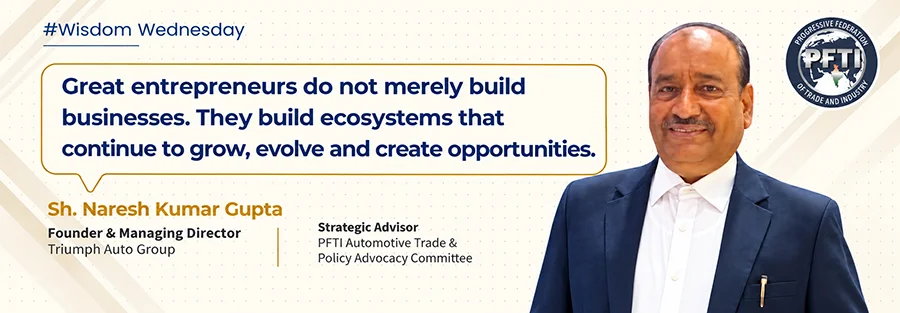
A successful entrepreneur can build a profitable company. A great entrepreneur often goes further. They create relationships, develop people, strengthen suppliers, open markets, share knowledge, encourage new ventures, and build institutions that continue creating value beyond one balance sheet. This wider perspective is the essence of business ecosystem development.
An ecosystem is stronger than a single enterprise because it connects multiple participants whose progress can reinforce one another. Customers create demand, suppliers build capability, professionals contribute expertise, institutions provide support, investors enable expansion, and industry platforms create connections. When entrepreneurs deliberately strengthen these relationships, business ecosystem development becomes a long-term growth strategy rather than a fashionable idea.
Why Business Ecosystem Development Matters Beyond One Company
Ecosystem growth strategy matters because no enterprise controls every capability required for long-term success. Businesses depend on suppliers, technology partners, employees, customers, logistics providers, financial institutions, advisers, regulators, and knowledge networks.
Business Ecosystem Development Starts With a Wider Entrepreneurial Vision
Ecosystem growth strategy begins when leadership asks a broader question: what people, partnerships, capabilities, and institutions must become stronger for this opportunity to grow over time?
Business Ecosystem Development Creates Opportunities Through Collaboration
Ecosystem growth strategy can connect manufacturers with technology providers, exporters with market advisers, startups with mentors, established companies with specialised suppliers, and industry leaders with emerging entrepreneurs.
PFTI’s article Giving Industry a Stronger, Unified Voice describes collaboration as a way to turn individual strengths into collective opportunities and highlights networking, partnerships, knowledge sharing, and wider business engagement.
Business Ecosystem Development Requires Strong Supplier Networks
A company’s performance is often limited by the strength of its supply chain.
Business ecosystem development therefore includes helping suppliers improve quality, delivery reliability, technology, documentation, safety, and production capability.
Business Ecosystem Development Invests in People, Not Only Assets
Business ecosystem development should therefore create opportunities for employees, managers, apprentices, entrepreneurs, and professionals to develop new capabilities.
PFTI’s article Are You the Architect of Your Business – or Its Permanent Emergency Department? makes a related point: founders create more value when they design organisations capable of functioning without constant intervention.
Business Ecosystem Development Encourages New Entrepreneurs
Business ecosystem development can create room for employees, partners, distributors, service providers, and younger founders to build businesses around emerging needs.
When experienced entrepreneurs mentor or connect newer businesses, they help expand the pool of capable participants around the sector.
The ecosystem then becomes a source of new companies rather than a structure designed only to protect established ones.
Business Ecosystem Development Depends on Knowledge Sharing
Businesses learn faster when useful knowledge can move through the network.
Business ecosystem development benefits from forums, workshops, industry research, technical discussions, case studies, peer learning, and access to specialists.
The PFTI Services page highlights research, industry insights, mentoring, advisory support, publications, business networking, and cluster development among the federation’s services.
Knowledge sharing does not require companies to reveal confidential information or competitive strategy. It means creating channels where common challenges, regulatory developments, market trends, and proven practices can be understood more efficiently.
Better-informed businesses make better decisions.
Business Ecosystem Development Connects Competition With Collective Progress
An ecosystem contains competitors as well as partners.
Business ecosystem development does not remove competition. It creates areas where competitors can still benefit from shared infrastructure, stronger standards, skilled talent, better policy dialogue, or common market development.
For example, companies may compete for customers while jointly supporting skill development, export promotion, technology adoption, or improvements in industrial infrastructure.
This balance matters. Healthy competition drives performance, while selective collaboration strengthens the environment in which everyone competes.
Mature entrepreneurs understand where to compete aggressively and where collective action can create a larger opportunity for the entire sector.
Business Ecosystem Development Can Create Global Opportunities
Ecosystems become more valuable when they connect local capability with international demand.
Business ecosystem development can help companies access global partners, technology, customers, investors, and specialist knowledge.
Reuters reported in October 2026 that Jabil and Adani Enterprises signed an agreement to explore a 50:50 venture for AI and data-centre equipment manufacturing in India. The planned collaboration combines manufacturing capability, infrastructure, and growing technology demand. Read the Reuters report.
Such partnerships illustrate how opportunities can expand when different organisations contribute complementary strengths instead of working in isolation.
Business Ecosystem Development Needs Institutions That Connect Participants
Entrepreneurs can create relationships individually, but institutions can make connection more systematic.
Business ecosystem development benefits from industry associations, chambers, educational institutions, accelerators, financial organisations, government bodies, and professional networks that connect participants repeatedly.
The PFTI About Us page describes the federation’s vision as creating an ecosystem where businesses of different sizes can thrive through innovation, strategic alliances, expert insights, and wider industry empowerment.
Institutions matter because they can preserve relationships and knowledge beyond one entrepreneur’s personal network.
That continuity helps ecosystems survive leadership transitions and market cycles.
Business Ecosystem Development Is Built on Interdependence
The ecosystem concept itself is based on interdependent actors.
Business ecosystem development recognises that firms create and capture value through relationships with other organisations and stakeholders.
Wikipedia’s overview of a business ecosystem describes it as a network of interconnected organisations – including suppliers, distributors, customers, competitors, and other stakeholders – that collaborate and compete while creating value.
The practical lesson is important: growth becomes more durable when the surrounding network becomes stronger too.
An entrepreneur who weakens suppliers, hoards capability, or prevents others from growing may create short-term dependence but long-term fragility.
Business Ecosystem Development Requires Trust and Clear Standards
Relationships become valuable only when participants can rely on one another.
Business ecosystem development therefore depends on trust, transparency, fair dealing, predictable processes, and clear performance expectations.
Trust does not mean accepting weak performance. Strong ecosystems usually have demanding standards because participants know that poor quality by one member can damage opportunities for others.
Entrepreneurs can strengthen trust by paying suppliers fairly, honouring commitments, sharing expectations clearly, protecting confidential information, and resolving disagreements professionally.
These behaviours make collaboration easier because partners spend less time protecting themselves from uncertainty.
Business Ecosystem Development Should Create Shared Value
An ecosystem becomes unstable when one participant captures nearly all the value.
Business ecosystem development works better when customers, suppliers, partners, employees, and other participants can see a reason to remain engaged.
Shared value does not mean equal profit. Different participants carry different risks and responsibilities.
It means that relationships should create enough benefit for capable partners to invest, improve, and stay committed over time.
Great entrepreneurs think about whether the network is becoming stronger, because a healthy network can support opportunities that no single participant could create alone.
Business Ecosystem Development Helps Businesses Adapt
Markets change. Technologies shift. Regulations evolve. Customer expectations move quickly.
Business ecosystem development improves adaptability because companies can access ideas and capabilities beyond their own organisation.
A manufacturer may learn about automation from a technology partner. A startup may gain market insight from an established enterprise. A supplier may improve standards after working with a demanding customer.
These exchanges increase the speed at which the wider network can respond to change.
An isolated company has only its own knowledge. A connected company can learn from many sources.
Business Ecosystem Development Creates a Stronger Legacy
A founder’s legacy should not be measured only by the size of the company they leave behind.
ecosystem growth strategy creates a wider legacy through people developed, suppliers strengthened, entrepreneurs mentored, institutions supported, and opportunities created.
This is one reason ecosystems can outlast individual leaders.
A strong network continues generating relationships and possibilities even when the original entrepreneur is no longer involved in every decision.
That is a deeper form of entrepreneurship: building conditions in which other people can succeed too.
Why PFTI Supports Business Ecosystem Development
PFTI’s positioning naturally connects with this wider view of entrepreneurship.
ecosystem growth strategy requires collaboration, representation, knowledge, partnerships, networking, mentoring, and access to opportunity – areas that appear repeatedly across PFTI’s mission and services.
The federation’s article A Collective Commitment to Empower Indian Industry describes its role as bringing businesses together to exchange ideas, address challenges, and explore opportunities for sustainable growth.
PFTI cannot build an entrepreneur’s ecosystem for them. It can, however, create a platform where useful connections are easier to make and collective capability can grow.
Conclusion: Business Ecosystem Development Multiplies Entrepreneurial Impact
Great entrepreneurs build businesses that solve problems, create jobs, and generate economic value. The most influential entrepreneurs often go further.
ecosystem growth strategy allows their impact to spread through suppliers, employees, partners, new entrepreneurs, institutions, knowledge networks, and wider markets.
This does not happen automatically. It requires leaders who are willing to collaborate, develop people, invest in relationships, share opportunities, set standards, and support institutions that strengthen the broader business environment.
A company can become successful because of one entrepreneur’s vision. An ecosystem becomes successful when that vision creates space for many other people to contribute and grow.
That is the difference between building an enterprise and building something that continues to generate opportunity beyond the enterprise itself.