

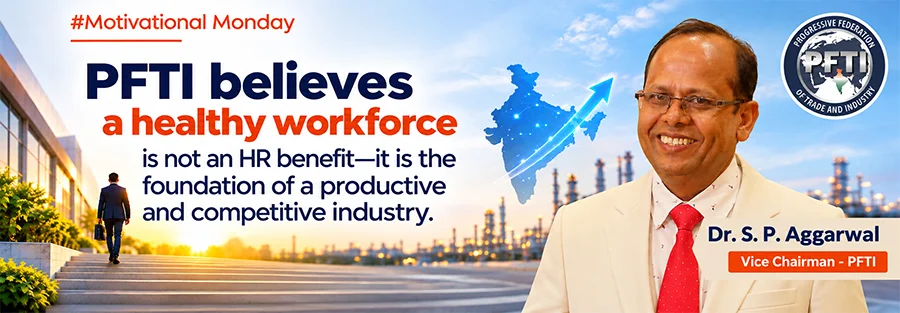
Factories, offices, warehouses, and service organisations depend on people who can work safely, think clearly, learn continuously, and recover properly from the demands of their jobs. Machines, technology, systems, and capital matter, but they cannot create sustained performance without capable people behind them. That is why workplace health and productivity should be treated as a business priority rather than as a once-a-year wellness activity.
PFTI’s support for workforce-focused initiatives reflects this wider idea. Through collaborations involving health awareness, financial wellbeing, learning, and workplace development, the federation is highlighting an important principle: a competitive industry is built on people who are supported by safe conditions, credible information, thoughtful management, and practical access to wellbeing resources. workplace health and productivity becomes stronger when employee health and business performance are considered together without making exaggerated promises.
Why Workplace Health and Productivity Matters for Industrial Competitiveness
workplace health and productivity influences each of these indirectly because people operate machines, solve problems, manage customers, make decisions, and maintain standards.
Workplace Health and Productivity Starts With Safety Before Wellness
workplace health and productivity begins with the physical conditions in which employees work.
The broader field of occupational safety and health focuses on protecting the safety, health, and welfare of people at work, including prevention of workplace injury and occupational disease.
Workplace Health and Productivity Requires Better Ergonomics
workplace health and productivity can improve when companies pay attention to how people lift, sit, stand, reach, repeat movements, use screens, handle tools, and move through the workplace.
Workplace Health and Productivity Includes Mental Wellbeing
workplace health and productivity also involves psychological demands, workload, role clarity, recovery time, interpersonal behaviour, and whether employees feel able to raise concerns.
Workplace Health and Productivity Is Affected by Job Design
workplace health and productivity depends on how work is organised.
Reuters reported in July 2026 that debate over high sickness absence in Germany included warnings from researchers that poor working conditions, understaffing, heavy emotional demands, and low rewards can contribute to health-related absence. Read the Reuters report.
Workplace Health and Productivity Benefits From Preventive Awareness
workplace health and productivity can be supported through credible awareness around sleep, hydration, nutrition, physical activity, stress, preventive screening, and occupational risk.
PFTI-SGT Initiatives Support Workplace Health and Productivity
PFTI’s article Partnering for People & Progress describes the PFTI-SGT Fit Workforce Mission as a collaboration aimed at healthier and happier workplaces.
This aligns closely with workplace health and productivity because universities and health professionals can bring expertise that individual businesses may not have internally.
Workplace Health and Productivity Can Include Financial Wellbeing
workplace health and productivity therefore has a broader dimension.
Workplace Health and Productivity Requires Respect for Privacy
workplace health and productivity initiatives should collect only the information genuinely needed for a programme and should explain how it will be used.
Trust is essential.
Workplace Health and Productivity Should Be Inclusive
workplace health and productivity programmes should consider age, gender, shift patterns, job type, literacy, language, disability, location, and digital access.
Inclusion does not mean creating a separate programme for every individual.
Workplace Health and Productivity Should Not Shame Employees
workplace health and productivity should avoid public weigh-ins, insulting language, appearance-based judgments, or pressure around personal health choices.
A respectful programme focuses on access, knowledge, safe work conditions, and voluntary support.
It should never turn health into a competition that embarrasses people.
Dignity is part of wellbeing.
Workplace Health and Productivity Needs Managers Who Understand Their Role
Managers shape the daily employee experience more than posters or campaigns.
workplace health and productivity improves when managers know how to plan workloads, communicate priorities, respond to safety concerns, manage leave fairly, and avoid creating unnecessary pressure.
Training managers can therefore be an important part of a workplace-health strategy.
They do not need to provide medical advice.
They do need to recognise when an issue should be escalated to HR, safety professionals, occupational-health specialists, or other qualified experts.
Good management creates conditions in which employees can perform without avoidable organisational friction.
Workplace Health and Productivity Can Improve Attendance Without Policing Illness
Absence matters operationally, but the response should be intelligent.
workplace health and productivity should not be reduced to forcing sick employees to work.
Presenteeism—working while unwell—can affect safety, quality, recovery, and potentially the health of others.
Businesses should examine patterns carefully.
Recurring absence may reflect health issues, unsafe conditions, poor job design, staffing problems, or individual circumstances.
The objective should be to understand causes and improve systems rather than assume every absence represents weak commitment.
Workplace Health and Productivity Should Connect With Occupational Health Expertise
Industrial workplaces often involve risks that require specialist knowledge.
workplace health and productivity is stronger when businesses know when to involve occupational physicians, safety professionals, ergonomists, physiotherapists, mental-health professionals, or other qualified specialists.
General wellness content cannot replace professional assessment of workplace hazards.
For example, repeated back pain in a material-handling team may require ergonomic analysis rather than motivational messaging.
Professional expertise helps businesses identify root causes and choose interventions that match the actual risk.
Healthy Workforce Systems Can Support Skill and Capability
Healthy employees also need the capability to perform changing jobs.
healthy workforce systems connects with training because technology, automation, safety systems, and new processes can create stress when people are expected to adapt without preparation.
The PFTI About Us page identifies skill development and workforce empowerment as important objectives.
Training helps employees understand new tools and expectations.
It can also reduce errors and uncertainty.
A competitive workforce is not only physically present.
It is capable, informed, and prepared for the work it is expected to perform.
PFTI Services Can Expand Healthy Workforce Systems
The PFTI Services page highlights networking, mentoring, industry insights, advisory support, and other resources that connect businesses with expertise.
These capabilities can support healthy workforce systems by helping employers learn from specialists and from the experience of other organisations.
A small company may not have a full internal wellness, safety, or occupational-health team.
An industry platform can create access to knowledge that would otherwise be difficult to organise independently.
PFTI should not replace medical or safety professionals.
Its useful role is to connect, convene, inform, and help credible initiatives reach businesses.
PFTI Membership Can Strengthen Healthy Workforce Systems
Member participation can make workforce initiatives more practical.
The PFTI Membership page highlights workshops, learning opportunities, networking, member support, and opportunities to participate in committees and projects.
These channels can strengthen healthy workforce systems when employers share what their workforces actually need.
Manufacturing, logistics, retail, professional services, and field operations have different health challenges.
Member feedback helps avoid generic programmes.
It can also identify common issues that deserve shared learning or expert sessions.
Healthy Workforce Systems Should Be Measured Carefully
Businesses naturally want to know whether an initiative works.
healthy workforce systems should be evaluated with realistic measures rather than exaggerated return-on-investment claims.
Useful indicators may include participation, employee feedback, safety incidents, ergonomic improvements, training completion, awareness levels, or identified workplace risks that were corrected.
The workplace wellness literature includes a wide range of programme models and mixed evidence about outcomes.
That is why businesses should measure their own programmes carefully and avoid promising that one wellness activity will automatically transform productivity.
Healthy Workforce Systems Is a Shared Responsibility
A healthy workplace cannot be created by HR alone.
healthy workforce systems requires leadership commitment, manager behaviour, employee participation, safe systems, professional expertise, and practical resources.
Employees also have responsibilities: following safety procedures, using protective equipment correctly, reporting hazards, participating honestly, and seeking appropriate professional care when needed.
The objective is not to transfer all responsibility to the employer or the employee.
It is to create a system where each party understands its role.
Healthy Workforce Systems Supports a Stronger Industrial Culture
The most valuable outcome may be cultural.
healthy workforce systems becomes sustainable when people believe that safety, health, quality, and performance belong in the same conversation.
A company should not have to choose between caring for people and operating competitively.
Poorly designed programmes can waste time, but well-managed workplaces recognise that long-term performance depends on capable people working in conditions that support safe and consistent execution.
This is especially important as Indian industry becomes more technology-intensive and globally connected.
Conclusion: Healthy Workforce Systems Builds the Human Foundation of Competitiveness
A productive and competitive industry needs more than machines, finance, and technology.
healthy workforce systems reminds businesses that people are part of the operating system.
Safe work conditions, good job design, ergonomics, credible health information, respectful management, financial awareness, professional support, skills, and privacy all contribute to a stronger workforce environment.
PFTI’s workforce-focused collaborations can help bring businesses, educational institutions, health professionals, and community partners together around this purpose.
The aim should not be to promise perfect health or guaranteed productivity.
It should be to create workplaces where people have a better chance to work safely, remain capable, and contribute consistently.
That is a practical foundation for stronger enterprises and a more competitive industry.