

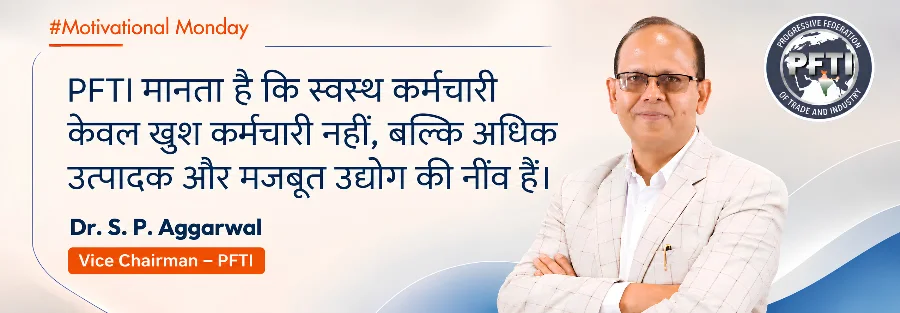
Industrial progress is often described through output, investment, export orders and new technology. Yet behind every production target stands a person who must arrive at work alert, capable and safe. PFTI believes healthy employees are the foundation of a more productive and stronger industry because machines alone cannot sustain quality, judgment or trust. A healthy workforce is not an optional benefit reserved for large corporations; it is part of how responsible businesses prepare for dependable performance.
For Indian manufacturers and MSMEs, the conversation must move beyond occasional health camps. It should address everyday working conditions, sensible schedules, safety habits, access to reliable information and respectful management. Building a healthy workforce means recognising that employee wellbeing and industrial competitiveness can reinforce each other when leaders make practical, consistent choices. A healthy workforce deserves sustained attention.
Why a Healthy Workforce Matters to Indian Industry
A factory may operate with modern equipment, but its output depends on operators noticing defects, supervisors coordinating shifts and maintenance teams recognising hazards. Fatigue, discomfort, dehydration or unmanaged stress can make those tasks harder. A healthy workforce supports steadier concentration, better communication and more consistent attention to standards, although outcomes vary from one workplace to another.
The real question for employers is not whether wellbeing sounds important. It is whether their systems make safe and healthy work possible. When organisations listen to employees and remove avoidable workplace risks, a healthy workforce becomes a practical operating priority rather than a poster in the reception area.
A Healthy Workforce Begins With Safe Working Conditions
Health cannot be separated from the environment in which people earn their living. Industrial settings may involve moving machinery, noise, dust, chemicals, heat, repetitive movements or long periods of standing. Employers should identify relevant hazards, maintain guards and ventilation, provide suitable protective equipment and train people in procedures they can understand and follow.
Occupational safety and health is fundamentally about preventing work-related harm, not asking employees to tolerate risks in the name of productivity. A healthy workforce needs clear reporting channels and supervisors who act when a near miss or unsafe condition is raised. This prevention-first approach also protects continuity when operations are under pressure.
Small Improvements Can Support a Healthy Workforce
Not every useful improvement requires a large capital budget. Clear walking routes, accessible drinking water, clean washrooms, sensible material handling, adjustable workstations and routine maintenance can reduce unnecessary strain. Rest breaks should reflect the type of work and applicable requirements. Simple visual instructions in languages understood by workers may improve adoption.
For a healthy workforce, consistency matters more than a one-day campaign. A safety checklist completed every shift, followed by corrective action, is more meaningful than a photograph of an awareness event that produces no lasting change.
Health Awareness Should Be Practical, Not Performative
Workplace education is useful when employees can apply it. Sessions on hydration, nutrition, tobacco risks, sleep, common lifestyle concerns and recognising warning signs may encourage earlier help-seeking. Any medical screening should use qualified professionals, appropriate consent and confidential handling of personal health information. Employees should never feel pressured to disclose diagnoses to managers.
A healthy workforce also needs trustworthy guidance rather than miracle claims. Companies can invite healthcare experts for general awareness and refer individual medical questions to licensed practitioners. Programmes should be voluntary where appropriate, accessible to contract workers when feasible, and respectful of differences in age, roles and physical ability.
A Healthy Workforce Depends on Mental Wellbeing Too
An employee may appear physically fit while carrying serious work-related stress. Unrealistic deadlines, unclear instructions, disrespectful behaviour and constant schedule changes can undermine confidence and focus. Managers need to spot pressures within systems instead of treating every difficulty as a personal weakness. A healthy workforce is more likely when people can speak about workload and safety concerns without fear.
Useful steps include predictable communication, fair treatment, realistic production planning, reasonable escalation routes and appropriate access to professional support. Leaders should protect privacy and avoid diagnosing employees themselves. The aim is a healthier work environment, not monitoring personal lives.
Why Supervisors Shape the Healthy Workforce Every Day
Employees experience company culture most directly through their immediate supervisor. A manager who regularly ignores breaks, dismisses complaints or rewards unsafe shortcuts sends a strong message, regardless of what the HR policy says. Conversely, a supervisor who plans tasks properly, checks understanding and corrects hazards can strengthen day-to-day confidence.
Creating a healthy workforce therefore requires training frontline leaders to notice fatigue, encourage reporting and respond respectfully. Senior management must support those practices with staffing, maintenance budgets and accountability. A policy without operational backing will rarely change behaviour.
PFTI and the Vision of a Healthy Workforce
PFTI has already highlighted the connection between workforce wellbeing and stronger industry through people-focused partnerships. Its published work describes the PFTI–SGT Fit Workforce Mission with SGT University, alongside a separate financial wellness initiative supported with Prayog Foundation. These initiatives reflect a view of development that includes the people who sustain businesses, not only the businesses themselves.
This vision of a healthy workforce should be understood as an invitation to collaborate and build awareness, not a claim that any particular health outcome has already been achieved. The value of such partnerships lies in combining industry access with relevant expertise and turning discussion into actions that employers can realistically sustain.
How MSMEs Can Build a Healthy Workforce on a Realistic Budget
Small manufacturers frequently operate with tight margins and limited HR resources. That makes prioritisation important. Start by asking workers which aspects of the job create preventable discomfort or risk. Review incidents, absenteeism patterns and high-strain tasks without drawing conclusions about individual health. Then identify changes that can be introduced and maintained.
Building a healthy workforce may begin with safer lifting methods, reliable drinking water, heat-related precautions, better task rotation where suitable and clearer emergency communication. Larger investments should follow a workplace-specific risk assessment. Copying a corporate wellness programme without considering factory conditions can waste effort and overlook the real problem.
A Practical 90-Day Healthy Workforce Roadmap
In the first 30 days, appoint a responsible coordinator, listen to workers and document major safety and wellbeing concerns. Review existing controls with competent personnel. During days 31 to 60, fix urgent and feasible issues, brief supervisors and introduce one or two useful awareness sessions. By day 90, ask employees whether changes helped and review what remains unresolved.
This healthy workforce roadmap is intentionally modest. It favours visible improvements, measurable follow-through and honest feedback over ambitious promises. Business owners can expand the programme only after the essentials are working.
Measure Healthy Workforce Progress Without Invading Privacy
Wellbeing programmes should be reviewed carefully. Useful operational indicators might include corrective actions completed, safety-training participation, reported hazards resolved, access to water and rest facilities, or anonymous employee feedback. Measures should be interpreted in context: a rise in hazard reports can mean workers trust the reporting system, not necessarily that conditions have worsened.
A healthy workforce cannot be reduced to a single score or assumed return on investment. Research on workplace wellness programmes has produced mixed findings, so businesses should avoid promising automatic reductions in costs or absenteeism. Health information must remain confidential, and participation should never become a condition for fair treatment.
A Healthy Workforce Strengthens Quality and Long-Term Resilience
Industrial competitiveness depends on processes that continue to work when orders accelerate, teams change or supply chains are disrupted. A healthy workforce can support resilience because workers are better positioned to raise concerns, learn new methods and maintain attention to quality when the workplace supports them. Health is not a substitute for training, machinery upkeep or sound management; it complements them.
The connection becomes especially important in jobs requiring precision and coordination. When employees trust that production targets will not override basic safety, they have stronger reasons to report problems early. Over time, this can support a culture of responsibility instead of silent risk-taking.
Industry Collaboration Can Expand Healthy Workforce Awareness
No single MSME needs to solve every workplace issue alone. Industry associations can create opportunities to exchange practical ideas, connect with specialists and share examples of improvements that suit local conditions. Joint learning may make specialist guidance easier to access, while each employer remains responsible for decisions at its own workplace.
Through its wider focus on industry engagement and collaboration, PFTI offers a relevant setting for conversations about a healthy workforce. Members can learn from one another, examine workable practices and discuss where expert support is needed. The most useful exchange is specific: what changed, what it cost, what employees said and what still requires attention.
What Business Leaders Should Do Next for a Healthy Workforce
Leadership begins with a simple commitment: employees should not have to choose between earning a living and avoiding preventable harm. Ask teams about daily obstacles, address significant hazards promptly and keep managers accountable for safe routines. Put employee understanding and dignity ahead of publicity. Make improvement part of operations rather than a once-a-year celebration.
For businesses considering the next step, a healthy workforce strategy should sit beside production, quality and workforce-development plans. PFTI believes stronger industry is built by people whose wellbeing is treated with seriousness and respect. When employers invest in safer systems and healthier working conditions, they build a more dependable foundation for progress. That is the enduring value of a healthy workforce.
Conclusion: A Healthy Workforce Is an Industrial Priority
The strongest industrial organisations do more than push output upward. They make work safer, strengthen communication and create conditions in which employees can contribute with confidence. A healthy workforce grows through practical choices, credible partnerships and the willingness to keep improving after the first awareness programme ends.
PFTI’s people-centred perspective encourages Indian industry to think beyond short-term numbers. A healthy workforce is not a guarantee of higher profits, but protecting people is both a fundamental responsibility and a sensible part of building a stronger, more productive industrial future.
Editorial note: The health and productivity discussion is informational. Workplace programmes should be adapted to applicable requirements and professional guidance; no specific outcomes are promised.