

What Purpose-Driven Leadership Really Means
Why Purpose-Driven Leadership Matters in Business
Reuters has examined how corporate purpose can remain relevant even when political and commercial conditions become challenging. Its analysis highlights the importance of authentic values rather than temporary messaging. Readers can explore the Reuters analysis on corporate purpose.
When values are visible in hiring, partnerships, customer relationships, and difficult decisions, purpose-driven leadership becomes credible rather than promotional.
Building Success Through Purpose-Driven Leadership
Success and purpose are sometimes treated as opposites, but healthy organisations usually need both. Purpose-driven leadership does not reject profit or growth. It asks how stronger performance can support better people, processes, products, relationships, and communities.
A profitable company can invest in safer workplaces, training, technology, quality, innovation, and new markets. These investments strengthen the business while also creating wider benefits. Purpose-driven leadership applies the same discipline to impact that leaders already apply to commercial goals: clear objectives, responsible execution, review, and accountability.
Purpose-Driven Leadership Turns Achievement Into Impact
A milestone becomes more meaningful when it creates momentum for others. An entrepreneur can mentor younger founders. A manufacturer can help develop suppliers. An industry leader can create platforms where businesses exchange useful knowledge. Purpose-driven leadership turns individual achievement into a source of wider opportunity.
Impact is not limited to charity or donations. It can be created through the way a company operates and the standards it encourages. The concept is related to the triple bottom line, which considers social and environmental value alongside financial performance. Purpose-driven leadership similarly encourages a broader view of what successful business can contribute.
How Purpose-Driven Leadership Builds Stronger People
Organisations grow when people grow. A leader who focuses only on output may achieve targets, but a leader who also develops capability creates results that can continue without constant intervention. Purpose-driven leadership invests in learning, responsibility, mentoring, and meaningful opportunities.
This does not mean lowering performance standards. It means helping people understand both what they need to achieve and why the work matters. Purpose-driven leadership also gives capable employees room to solve problems, contribute ideas, and build confidence. Over time, these habits can produce stronger teams and future leaders.
Industry Collaboration and Purpose-Driven Leadership
Some challenges are too large for one company to solve alone. Skill gaps, market access, technology adoption, sustainability, and global competitiveness often require cooperation across organisations. Purpose-driven leadership therefore extends beyond company boundaries.
The Progressive Federation of Trade & Industry (PFTI) brings businesses, entrepreneurs, professionals, and industry stakeholders together on a collaborative platform. Readers can learn more about this approach on the PFTI About Us page.
When organisations exchange experience and work on common concerns, purpose-driven leadership can convert individual knowledge into shared progress for the wider business ecosystem.
Purpose-Driven Leadership Includes the Responsibility to Listen
Leadership is often associated with speaking, deciding, and directing. Impact also depends on listening. Purpose-driven leadership creates space for employees, customers, suppliers, and communities to explain what they actually need instead of assuming every solution is already known.
Listening can reveal operational problems senior teams do not see and opportunities customers have not clearly expressed. It can also expose initiatives that look impressive in presentations but create little practical value. Purpose-driven leadership asks whether the people an initiative is meant to help can genuinely feel the difference.
Measuring Purpose-Driven Leadership Through Real Outcomes
Purpose becomes weak when it exists only in slogans. Businesses need evidence that their initiatives are creating results. Purpose-driven leadership can be measured through outcomes that match the organisation’s goals.
A manufacturer may track safety improvement, waste reduction, supplier development, or employee training. An industry body may track knowledge sessions, useful business connections, participation, or member support. Purpose-driven leadership is strongest when leaders are willing to review what worked, acknowledge what did not, and improve the next effort instead of confusing activity with impact.
Sustainability and Purpose-Driven Leadership
Long-term impact is difficult to create if growth depends on waste, unsafe practices, or short-term decisions that create future problems. Purpose-driven leadership naturally connects with sustainability because both require leaders to think beyond immediate results.
For businesses, sustainability can involve energy efficiency, responsible sourcing, waste reduction, safer workplaces, and better use of resources. It can also include the sustainability of people through fair opportunities and continuous learning. Purpose-driven leadership makes these considerations part of operating decisions instead of treating sustainability as a separate campaign.
Stronger Business Communities Need Purpose-Driven Leadership
An individual company can succeed while the ecosystem around it remains weak. Long-term industrial progress is stronger when businesses grow together. purpose-led leadership recognises the role of suppliers, service providers, startups, professionals, educational institutions, and industry associations in creating shared value.
PFTI membership provides opportunities for networking, industry engagement, learning, and business connections. Organisations interested in participating can explore the PFTI Membership page.
When experienced leaders share knowledge and emerging businesses bring new ideas, purpose-led leadership becomes a bridge between established capability and future potential.
The Personal Discipline Behind Purpose-Led Leadership
Purpose may sound inspirational, but living it requires discipline. Leaders face pressure, uncertainty, setbacks, and moments when the easier decision may not match stated values. purpose-led leadership requires consistency when nobody is watching.
It means communicating honestly, treating people respectfully during difficult periods, and resisting the temptation to use purpose only as a branding tool. purpose-led leadership also requires humility because no leader creates impact alone. Employees, mentors, customers, partners, families, and communities all contribute to a journey.
How Young Leaders Can Practice Purpose-Led Leadership
Young entrepreneurs and professionals do not need to wait until they reach the top of an organisation to create impact. purpose-led leadership can begin with small choices: helping a colleague learn, improving a process, mentoring someone, sharing expertise, or building a business that solves a genuine problem.
Habits developed early often shape how people lead when their responsibilities become larger. purpose-led leadership gives the next generation a practical way to combine commercial performance, ethics, collaboration, adaptability, and social awareness rather than treating these priorities as competing ideas.
Strong leadership is also visible in ordinary moments that rarely become public stories. It appears in how meetings are conducted, how credit is shared, how disagreements are handled, and how commitments are honoured when pressure rises. These details shape culture because employees and partners notice whether daily behaviour matches the values presented publicly. Over time, consistency creates credibility and makes an organisation’s purpose easier to believe. Leaders who pay attention to these moments build stronger foundations for trust, collaboration, learning, and long-term performance. The same principle applies outside the organisation, where reliable relationships with suppliers, customers, professional networks, and community partners depend on clear expectations and consistent follow-through over many years.
The Lasting Value of Purpose-Led Leadership
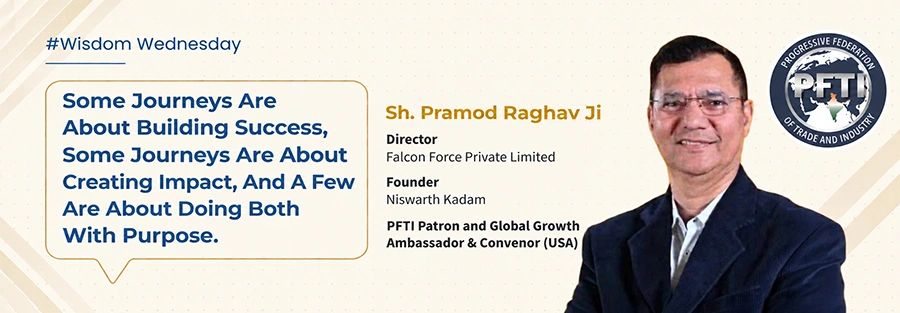
Every professional journey includes ambition, struggle, learning, and achievement. Some people build successful organisations. Others focus strongly on causes or communities. The rare journeys combine both and use achievement as a platform to create opportunities for others. That is the deeper value of purpose-led leadership.
Success still matters. It provides resources, credibility, and the ability to invest. But purpose asks what that success makes possible. purpose-led leadership encourages entrepreneurs to build organisations that perform well while developing people, strengthening relationships, and contributing to a healthier business ecosystem.
The lasting measure of purpose-led leadership is what remains after the milestone has passed: stronger people, better systems, trusted relationships, useful opportunities, and a positive influence that continues.
A successful journey can build a name. An impactful journey can improve lives. When both are connected by purpose-led leadership, success becomes more than an achievement. It becomes a contribution.