

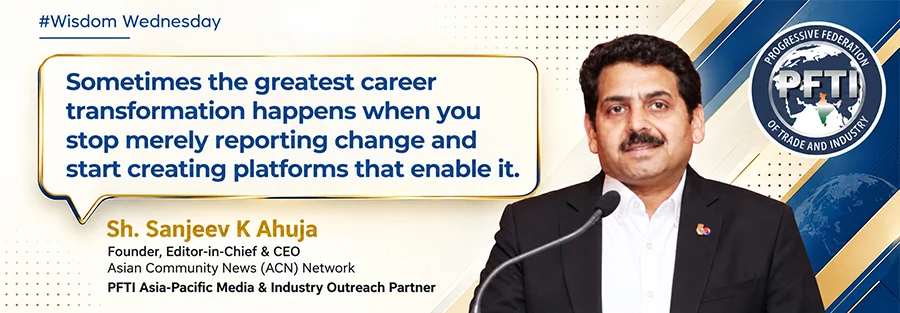
Many professionals spend years becoming excellent observers. They track numbers, prepare reports, highlight problems, summarise meetings, explain what changed, and document why performance moved up or down. Those skills are valuable. But there comes a point when the next step in a career is not better reporting. It is taking responsibility for what happens next. That is where career transformation begins.
The shift is subtle but powerful. Instead of asking, “What happened?” a professional starts asking, “What can I change?” Instead of waiting for direction, they identify priorities, build support, test ideas, and create measurable improvement. Career transformation is not about chasing a new title. It is about becoming someone who can move work, teams, customers, and organisations forward.
Why Career Transformation Begins With Ownership
Career transformation starts when a person stops treating every problem as someone else’s responsibility. A missed target, inefficient process, unhappy customer, repeated delay, or confused team becomes a question to investigate rather than simply a line to report.
Career Transformation Requires Moving From Observation to Action
Career transformation begins when a professional adds the next layer: what should be done about it?
Career Transformation Is Built Through Better Questions
Career transformation grows when professionals move beyond “Who made the mistake?” and ask “What system allowed this to happen?”
Career Transformation Requires Understanding the Business, Not Only the Role
Career transformation accelerates when a professional understands how their work connects with customers, revenue, cost, quality, risk, people, and strategy.
Career Transformation Becomes More Important in the AI Era
Career transformation now requires professionals to understand which tasks can be automated, which require judgement, and where human capability still creates the greatest value.
Reuters’ October 2026 “AI at Work” discussion reported that artificial intelligence is reshaping job tasks more rapidly than entire occupations, while experienced workers retain an advantage through judgement, context, and skills that technology cannot easily reproduce. Read the Reuters report.
The lesson is practical.
Career Transformation Requires Learning How to Lead Without Authority
Career transformation often begins before a promotion.
Influence comes from clarity, credibility, preparation, and consistency.
Career Transformation Needs the Courage to Make Recommendations
Career transformation requires the confidence to say, “Based on what we know, this is the option I recommend.”
Career Transformation Improves When You Learn to Experiment
Career transformation becomes easier when professionals learn to test change through small experiments.
They also generate evidence.
A small successful pilot can create stronger internal support than a long presentation about what might work.
Creating change becomes less risky when learning is built into the process.
Career Transformation Requires Strong Communication
Ideas fail when people do not understand them.
Career transformation depends on the ability to explain the problem, the proposed change, the reason it matters, and what people need to do differently.
The broader discipline of change management focuses on helping people and organisations move from a current state toward a desired future state.
Communication should be adapted to the audience.
Senior leaders may want business impact. Operations teams may need process clarity. Customers may need reassurance. Employees may need to understand how the change affects their work.
Clear communication reduces resistance because people can see the purpose behind the change.
Career Transformation Depends on Execution Discipline
Creating change is not the same as announcing it.
Career transformation becomes credible when professionals can convert ideas into milestones, owners, timelines, follow-up, and measurable results.
Many initiatives fail because the launch receives more attention than the implementation.
A change-maker asks whether responsibilities are clear, whether obstacles have been removed, and whether progress is being reviewed.
They also adjust when evidence shows that the original plan is not working.
Execution discipline turns personal initiative into organisational value.
PFTI Mentoring Can Support Career Transformation
Professionals often progress faster when they can learn from people who have already handled similar challenges.
The PFTI Services page highlights Mentoring & Advisory as a core service, connecting members with experienced professionals and expert panels.
This can support career transformation because career growth often depends on judgement that is difficult to learn from textbooks alone.
A mentor can challenge assumptions, ask better questions, and help a professional recognise blind spots.
Mentoring should not create dependence.
Its value is greatest when it helps people make stronger decisions independently over time.
PFTI Membership Can Expand Career Transformation Opportunities
Professional growth is shaped by exposure.
The PFTI Membership page highlights networking, workshops, committee participation, speaking opportunities, market insights, mentoring, and leadership roles across different membership categories.
These experiences can support career transformation by placing professionals in conversations beyond their normal workplace.
Exposure to entrepreneurs, functional leaders, policymakers, and industry experts can expand perspective.
A person who understands multiple industries and business models is often better prepared to create change because they have more examples to draw from.
Networks become valuable when they lead to learning, collaboration, and contribution rather than only exchanging contacts.
PFTI Leadership Shows How Career Transformation Can Evolve
The PFTI Founders page highlights leadership journeys connected with industry development, business transformation, mentoring, and institutional responsibility.
These examples reinforce an important point about career transformation: careers can evolve from functional expertise into wider leadership when people accept responsibility for creating impact beyond their original role.
That evolution usually happens gradually.
A professional solves bigger problems, supports more people, contributes to wider decisions, and becomes trusted with greater responsibility.
Career growth then becomes the result of demonstrated value rather than only tenure.
Career Transformation Requires Becoming Comfortable With Change
Professionals sometimes say they want growth while protecting every familiar routine.
Professional growth requires a willingness to learn new tools, work with new people, enter unfamiliar situations, and sometimes let go of expertise that is becoming less valuable.
This can feel uncomfortable because competence is part of professional identity.
Starting again in a new area may temporarily make a capable person feel inexperienced.
That discomfort is often a sign of development.
Growth becomes possible when a person stops using past success as a reason to resist the skills needed for the future.
Professional Growth Should Be Measured by Impact, Not Activity
Busy professionals are not always progressing.
Professional growth becomes clearer when people measure what changed because of their work.
Did customer complaints decrease? Did processing time improve? Did revenue increase? Did a team become more capable? Did a new system reduce errors? Did a project move from idea to implementation?
Impact-based thinking changes career conversations.
Instead of saying, “I prepared reports every month,” a professional can say, “I used those reports to identify a pattern and led an improvement that changed the result.”
That is a stronger story because it connects work with outcome.
Professional Growth Requires Feedback Without Defensiveness
People who create change will sometimes get things wrong.
Professional growth depends on the ability to receive feedback without treating every criticism as a threat.
Feedback can reveal weak assumptions, communication problems, execution gaps, or unintended consequences.
A mature professional asks what can be learned from the response.
They do not accept every opinion automatically, but they remain curious enough to examine it.
This mindset allows change-makers to improve faster because they do not need to protect the image of being right all the time.
PFTI’s Vision Supports Professional Growth
The PFTI About Us page describes a culture centred on innovation, empowerment, collaboration, integrity, excellence, and leadership.
These ideas align naturally with professional growth.
Innovation requires people willing to improve what exists. Empowerment requires confidence and capability. Collaboration requires influence across boundaries. Integrity ensures that change is pursued responsibly. Excellence demands continuous improvement.
A professional who develops these qualities becomes more valuable not only to one employer but to the wider industry ecosystem.
Career progress then becomes connected with contribution.
Professional Growth Means Becoming the Person Who Moves the Work Forward
The most important shift is behavioural.
Professional growth happens when people stop waiting to be told what improvement should look like.
They identify problems, gather evidence, involve the right people, propose solutions, test ideas, communicate clearly, and follow through.
They also know when to escalate, when to ask for expertise, and when to change direction.
This is what makes someone a creator of change rather than a reporter of change.
The transformation is visible in how others experience working with them.
Conclusion: Professional Growth Begins When You Start Creating Change
A career can remain busy for years without truly changing.
The deepest professional growth begins when a person moves from describing outcomes to influencing them.
That means taking ownership, understanding the business, asking better questions, making recommendations, experimenting, communicating, executing, learning from feedback, and building the confidence to lead before the title arrives.
Technology will continue to reshape tasks. Organisations will continue to restructure. Industries will continue to change.
The professionals who remain valuable will not be the ones who can only explain what happened.
They will be the ones who can understand what is happening, decide what should happen next, and help create the change responsibly.