

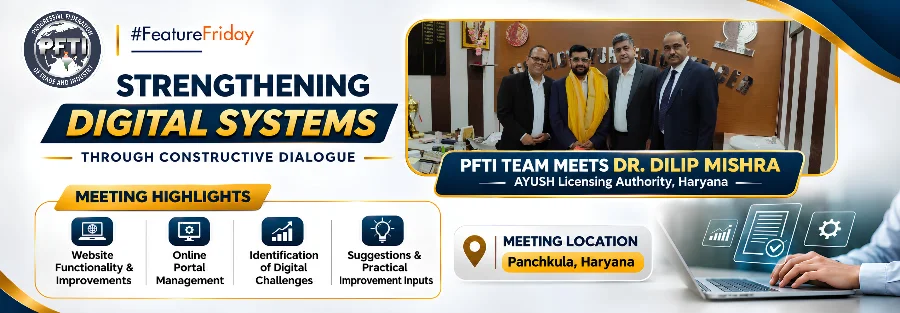
Digital regulation works best when technology, policy, and user experience improve together. A portal can reduce paperwork, create transparency, and speed up approvals, but only when manufacturers understand the process and the system reflects real operational needs. That is why constructive dialogue between industry and regulators matters.
PFTI’s engagement with Dr. Dilip Mishra, AYUSH Licensing Authority, Haryana, reflects this practical approach. The purpose of such dialogue is not to weaken regulation. It is to identify where digital processes can become clearer, more predictable, and easier to use while preserving the quality, safety, traceability, and compliance objectives that licensing systems are designed to protect. For manufacturers, regulators, and the wider AYUSH ecosystem, better digital systems can reduce avoidable friction and improve confidence in the licensing journey.
Why AYUSH Digital Licensing Matters for Manufacturers
AYUSH digital licensing matters because licensing is not a one-time administrative formality. Manufacturers may need fresh licences, renewals, product additions, amendments, technical approvals, and other regulatory services throughout the life of a business. When these processes move online, companies can gain better visibility, easier document submission, and reduced dependence on physical visits. The benefit, however, depends on system reliability and clear workflows. The goal should therefore be a system that is both compliant and usable.
AYUSH Digital Licensing Needs Constructive Industry-Regulator Dialogue
AYUSH digital licensing improves when manufacturers can explain where they face genuine procedural difficulty and regulators can clarify why specific controls exist. Both sides bring different information. Industry understands the practical steps required to prepare applications, documents, formulations, and manufacturing records. Licensing authorities understand legal requirements, quality safeguards, and administrative responsibilities. Constructive dialogue helps connect these perspectives. It can distinguish a true system problem from a misunderstanding and identify where better guidance, portal design, or communication could improve implementation without weakening regulation.
AYUSH Digital Licensing Entered a Major Transition in 2026
AYUSH digital licensing changed significantly in 2026 as the Ministry of Ayush moved licensing activity onto the e-Aushadhi platform. Hindustan Times reported in May 2026 that Haryana manufacturers were being trained on the portal and that licensing through the system would become mandatory from June 1, with offline applications no longer accepted for new cases. Read the Hindustan Times report. Such transitions create opportunities for better efficiency, but they also make timely user feedback especially important.
AYUSH Digital Licensing Should Reduce Repetitive Data Entry
AYUSH digital licensing can become more efficient when information already available in the system does not need to be entered repeatedly without reason. Manufacturers may hold licences, product records, technical documents, premises information, and authorised-person details that remain relevant across multiple applications. Where legally and technically appropriate, systems can use verified data intelligently while still requiring updates when facts change. Reducing unnecessary repetition saves time for applicants and reviewers.
AYUSH Digital Licensing Needs Clear Status Tracking
AYUSH digital licensing should help applicants understand where an application stands. Uncertainty creates repeated phone calls, emails, office visits, and follow-up messages that consume time for both businesses and officials. A useful status system can show whether an application is submitted, under scrutiny, awaiting clarification, pending inspection, approved, or returned for correction. Clear status labels do not guarantee faster approval, but they improve predictability. Manufacturers can respond more quickly when action is required, while licensing teams may receive fewer avoidable enquiries about files already moving through the system.
AYUSH Digital Licensing Should Make Deficiency Communication Specific
AYUSH digital licensing becomes more useful when deficiency notices explain exactly what is missing or incorrect. Generic messages can create repeated resubmissions because applicants do not know which document, field, format, or regulatory requirement needs correction. Clear digital communication should identify the issue, provide the relevant reference where possible, and explain the next action expected from the applicant. This does not mean regulators should complete applications for businesses. It means the digital system should make the compliance gap understandable enough for the manufacturer to correct it properly the first time.
AYUSH Digital Licensing Can Strengthen Traceability
AYUSH digital licensing is not only about convenience. A well-designed digital system can create stronger records of submissions, approvals, amendments, licences, and regulatory communication. This can improve traceability and reduce dependence on fragmented paper files. For manufacturers, an organised digital record can support internal compliance and audit preparation. For regulators, structured data can make it easier to understand application history and identify recurring issues.
PFTI’s Industry Policy Dialogue Supports AYUSH Digital Licensing
AYUSH digital licensing fits naturally with PFTI’s approach to structured engagement. PFTI’s article on Industry Policy Dialogue explains that useful dialogue begins with real business problems, evidence, and practical recommendations rather than general complaints. This approach is particularly relevant to digital licensing. Manufacturers can document recurring portal issues, processing bottlenecks, unclear instructions, or training needs. Regulators can then assess whether the solution requires technical improvement, guidance, process clarification, or simply better user understanding.
AYUSH Digital Licensing Requires Better User Training
AYUSH digital licensing can only work well when applicants know how to use the system correctly. A portal may be technically functional while users still struggle with registration, file formats, application categories, digital signatures, payment steps, or document uploads. The 2026 Haryana training initiative reported by Hindustan Times shows why transition support matters. A major digital change should be accompanied by practical guidance, updated FAQs, help-desk support, and examples that reflect common manufacturer situations.
AYUSH Digital Licensing Can Benefit From Industry Feedback Loops
AYUSH digital licensing should improve continuously as recurring user issues become visible. A feedback loop does not mean every requested change should be accepted. It means repeated problems should be recorded, categorised, and reviewed. If hundreds of applicants struggle with the same field or document requirement, the pattern deserves attention. Sometimes the answer may be better guidance rather than a system change. In other cases, a workflow may genuinely need redesign. The important point is that digital systems become stronger when implementation experience is treated as useful operational data.
Industry Representation Can Improve AYUSH Digital Licensing
AYUSH digital licensing benefits when individual concerns are compared before being presented as an industry issue. PFTI’s article on Industry Policy Representation explains how ground-level experiences can be documented, organised, and converted into practical recommendations. This is important because one manufacturer’s problem may result from an incomplete application, while a similar issue reported by many compliant applicants may indicate a wider process gap. Responsible representation separates isolated cases from patterns and helps regulators focus attention where system-level improvement may be justified.
AYUSH Digital Licensing Should Support Ease of Doing Business Without Weakening Standards
AYUSH digital licensing should make compliance easier to complete correctly, not make standards easier to avoid. The objective is better administration. Faster workflows, clearer instructions, digital records, and transparent status tracking can support manufacturers while preserving regulatory scrutiny. This balance is important because AYUSH products ultimately reach consumers. Licensing systems must continue to protect quality and safety expectations. Ease of doing business is strongest when compliant manufacturers can understand requirements, submit accurate information, and move through the process without unnecessary procedural friction.
AYUSH Digital Licensing Can Connect Manufacturers and Raw-Material Ecosystems
AYUSH digital licensing is part of a wider digital opportunity across the sector. The Times of India reported in January 2025 that a Haryana meeting involving medicinal-plant growers and ayurvedic manufacturers discussed an online portal that could help growers register raw-material details and connect more directly with manufacturers; Dr. Dilip Mishra, then identified as the state licensing authority, was also present. Read the Times of India report. The example shows how digital systems can support coordination across the broader AYUSH value chain, not licensing alone.
Business Policy Updates Help Manufacturers Track AYUSH Digital Licensing
AYUSH digital licensing rules and portal procedures can change as systems mature. PFTI’s article on Business Policy Updates explains why companies should monitor regulatory developments before they become urgent compliance problems. Manufacturers should assign responsibility for tracking official portal updates, Ministry communications, deadlines, and revised procedures. Relying on informal messages or old screenshots can create mistakes. A controlled internal process for regulatory updates helps ensure that the people preparing applications are working with current requirements rather than outdated assumptions.
Conclusion: AYUSH Digital Licensing Improves When Dialogue Becomes Action
AYUSH digital licensing can strengthen the Haryana AYUSH manufacturing ecosystem when technology, regulation, and practical user experience move together. Constructive dialogue with Dr. Dilip Mishra and the licensing authority can help surface recurring issues, clarify misunderstandings, and identify where better guidance or digital workflows may reduce unnecessary friction.
PFTI’s role is most useful when member feedback is organised responsibly, supported by examples, and converted into practical recommendations. The objective should never be to bypass regulatory standards. It should be to make compliant behaviour clearer, more predictable, and easier to execute.
Digital transformation succeeds when the system improves for both users and administrators. Better portals, stronger guidance, transparent communication, and continuous feedback can help manufacturers spend less time navigating avoidable process confusion and more time building quality, compliant, and competitive AYUSH businesses.